
The Fishing Reel
The Design and Development of the RB1 Fly Fishing Reel
Manufacture of fly reels in the UK had ceased, so the main objective was to bring production back to the UK and give the public the chance to buy a reel made in the UK.
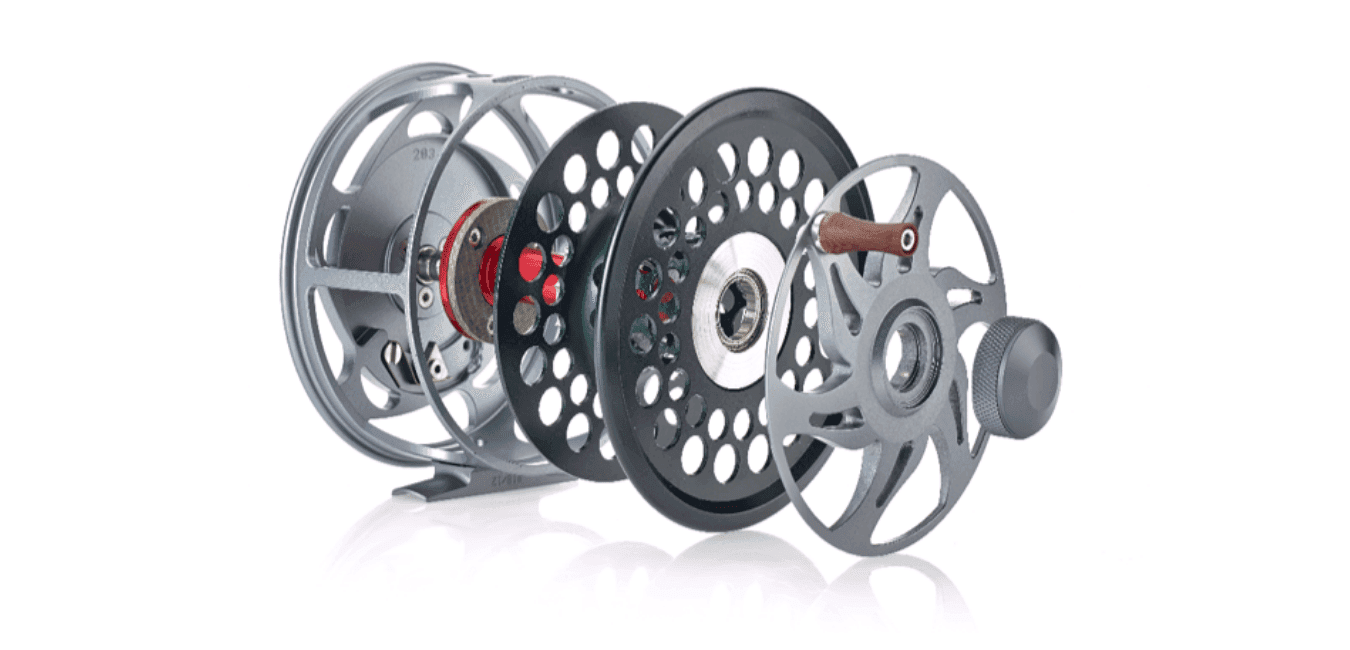
The Research and Development
With an ocean of fishing reels to choose from, why pick the newcomer on the scene, the RB1? We had to feature a standout attribute that would differentiate the Reel from others on the market; we decided to incorporate an anti-reverse system within the Handle assembly.
To define this, it basically means that once a fish has been hooked or the fisherman is extracting line, the handle does not rotate. This has not been designed into a reel before and is very practical, preventing your fingers from getting hit by a rotating handle, which can sometimes be at speed.
Initially, we looked at other reels on the market to determine a manufacturing budget; we could then gauge a retail price for our new and fast-developing reel.
Another critical feature for any reel is the braking system, which must withstand immense pressure. The largest game fish in the ocean can be enormous; the fastest is the sailfish, which can exceed 68 mph and grow over 3.4 metres in length.
Without a good braking system, it can be dangerous, and fishing for these fish would be impossible. Consequently, brake system design and material choice are critical.
Testing
To try to duplicate the effects a fish would have on a reel, test rigs were designed, built, and implemented on lathes. What became apparent during testing was the heat build-up once the drag was implemented on braking. Not only did the design need improvement, but the materials we had specified for the parts also needed to be revisited.
Re-Design
The main problem was the Anodising rubbing off the Spool under friction. The decision was made to re-design the Spool. After a design rethink, titanium inserts were developed to try to resolve the problem. Two sets of prototype inserts were manufactured to prove this design.
The prototype was almost there, but due to a wear issue when drag was initiated, the design was reviewed again. New friction pads were put into place, made from a different material, which showed much better durability and performance. These results were conclusive after testing the modified prototype; the final design was now ready for manufacture.
Design for Manufacture
Designs included 3D models of all twenty-nine parts implemented within the assembly and eighteen fully detailed engineering drawings enabling manufacture to commence.
With the design now complete, three prototypes were manufactured to validate the assembly and the proposed finishes. The final results and feedback were overwhelmingly successful, and the RB1 design was verified, put into production and distributed across the UK.
The Verdict
Extremely popular magazine amongst keen anglers, Trout and Salmon, chose the RB1 as their favourite reel out of fourteen that were tested in the £400+ retail category. This was a massive accolade, as it competed against all the top brands in the fishing reel industry.